
What is myofunctional therapy for children?
26 August 2026 · 5 min read
Physiotherapy for the muscles of the face, mouth and tongue — and a key partner to orthodontics.
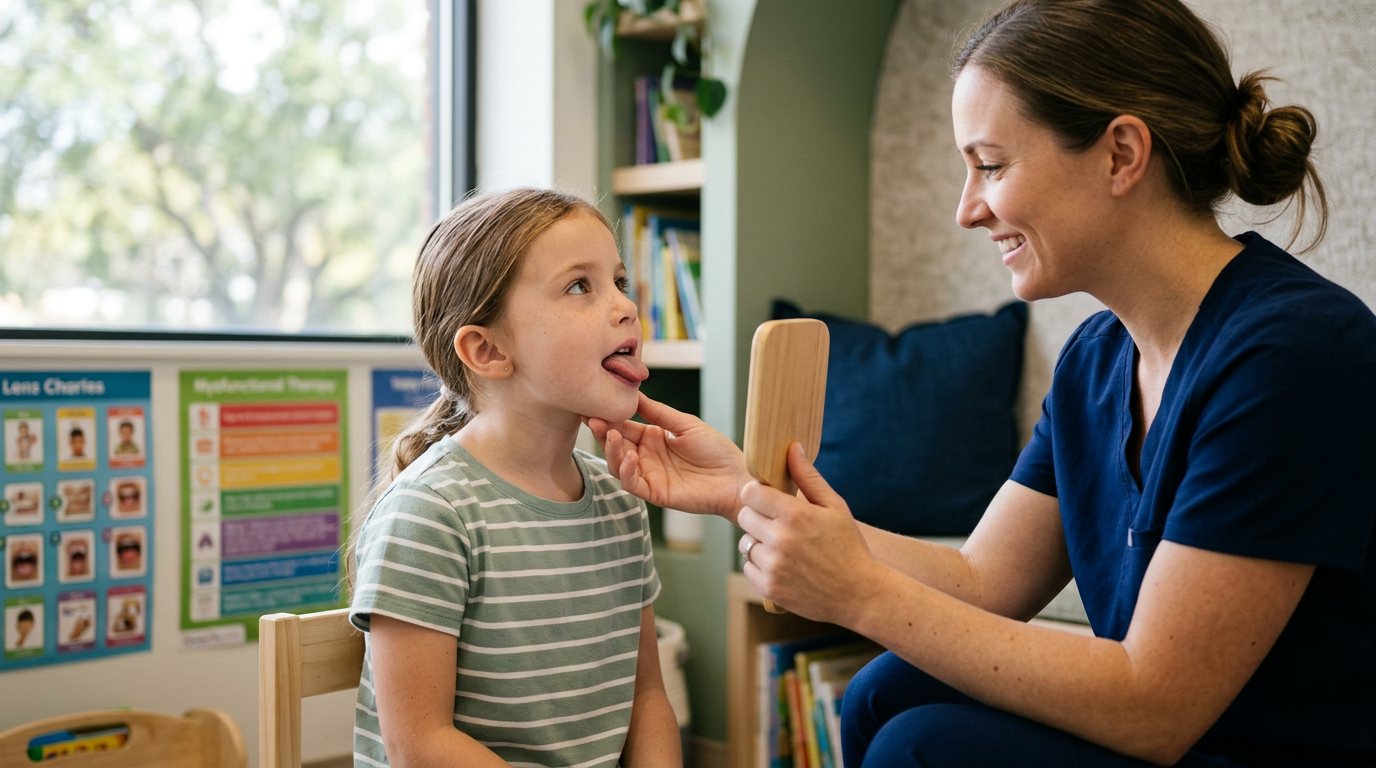
Training the muscles around the teeth
Orofacial myofunctional therapy retrains the tongue, lips and facial muscles through simple daily exercises. The aims are a resting tongue on the palate, closed lips, nasal breathing and a mature swallowing pattern.
Why it supports orthodontics
Teeth sit in a balance between tongue pressure from inside and lips and cheeks from outside. If that balance is wrong, teeth drift back after treatment — which is why habits are the single biggest cause of orthodontic relapse.
What a programme looks like
Sessions are short and playful: a handful of exercises done twice a day for a few minutes over several months, with regular reviews. Children who practise consistently often see improvements in breathing, speech clarity and even posture.
Questions about your child's smile or breathing?
Book an online consultation or visit one of our clinics for a full orthodontic and airway assessment.
Choose your regionMore articles
- Tongue thrust: when swallowing pushes teeth out of placeWe swallow around 800 times a day. A wrong pattern is a powerful orthodontic force.
- Thumb sucking and pacifiers: when to worrySucking is normal in babies. After the permanent teeth arrive, the maths changes.
- Tongue tie in children: function firstNot every tight frenulum needs releasing. What matters is what the tongue can actually do.