
Airway assessment for children: what we look at
3 September 2026 · 5 min read
How a dentist can spot a breathing problem long before anyone else does.
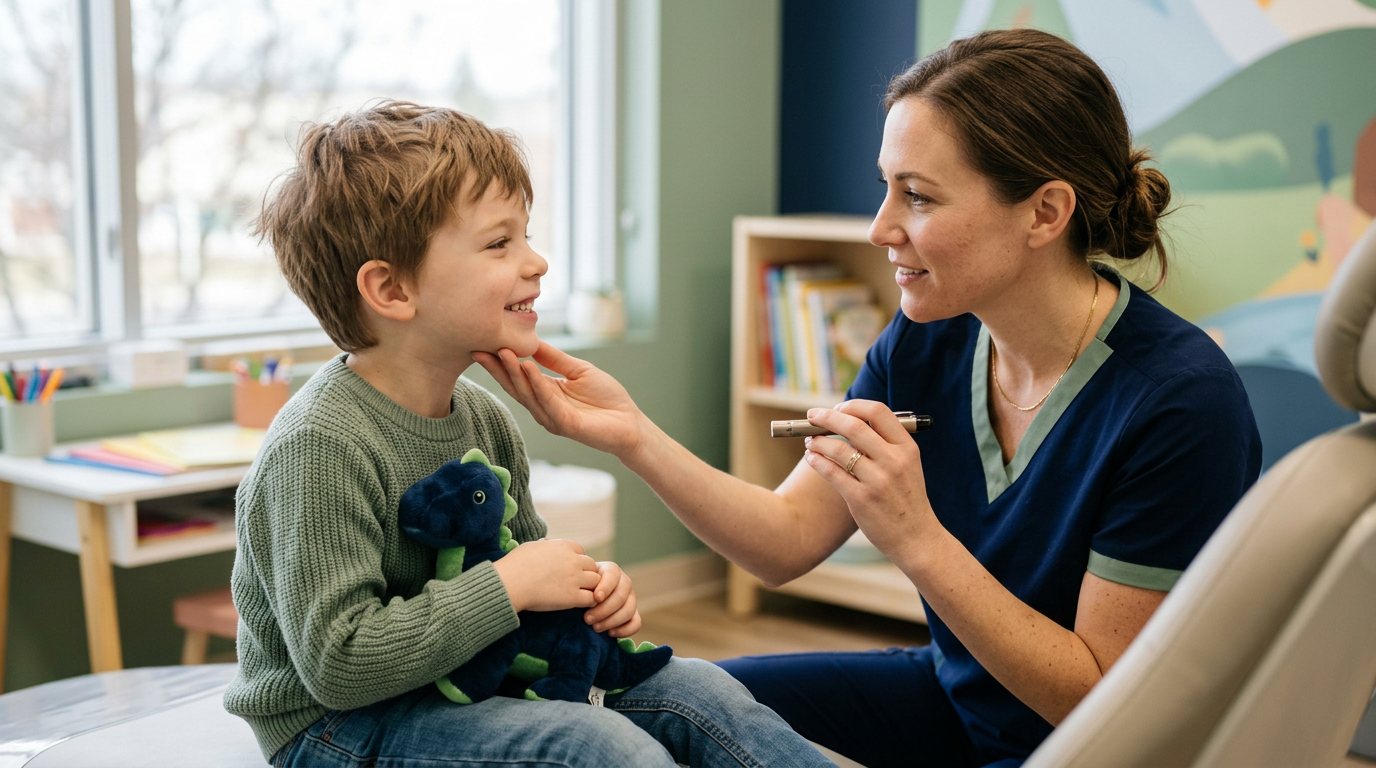
Why the dentist notices first
Children see a dentist regularly and the mouth shows the fingerprints of breathing: palate shape, tonsil size, tongue posture, dental wear and facial growth all tell a story about how a child breathes day and night.
What the assessment includes
We review sleep history and daytime symptoms, examine nasal patency, tonsils and adenoids, measure arch width and jaw position, assess tongue and lip function, and where indicated use imaging to evaluate airway dimensions.
What happens next
Findings guide a plan: expansion or growth guidance, myofunctional therapy, allergy or ENT referral, or a sleep study when disordered breathing is suspected. Nothing is treated in isolation — the airway is a team problem.
Questions about your child's smile or breathing?
Book an online consultation or visit one of our clinics for a full orthodontic and airway assessment.
Choose your regionMore articles
- Mouth breathing in children: more than a habitChronic mouth breathing changes facial growth, sleep quality and dental health.
- Snoring in children is never 'just cute'Habitual snoring can be the first sign of sleep-disordered breathing — and it affects behaviour and learning.
- Tonsils, adenoids and your child's biteEnlarged tissue at the back of the nose and throat can quietly reshape a growing face.