
Snoring in children is never 'just cute'
3 September 2026 · 5 min read
Habitual snoring can be the first sign of sleep-disordered breathing — and it affects behaviour and learning.
The signs at night
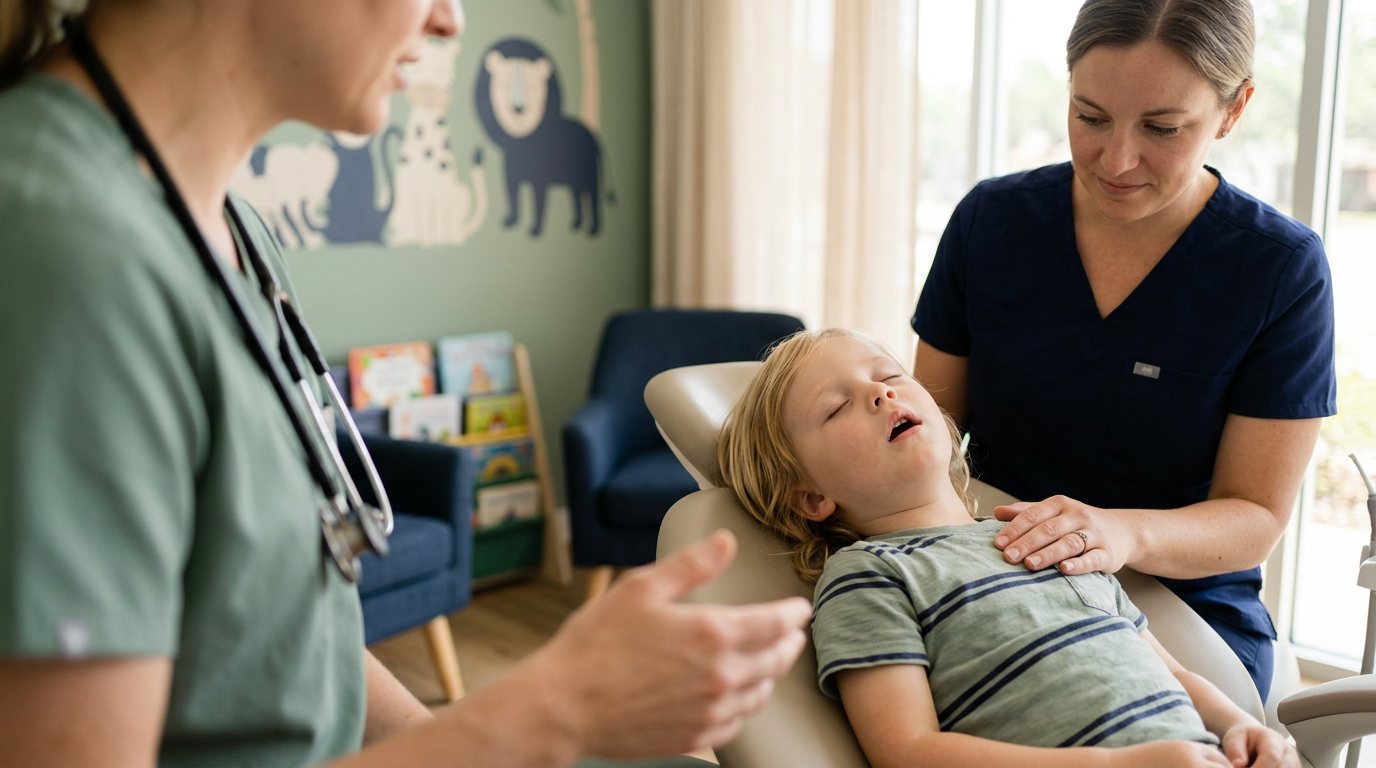
Watch for snoring on most nights, noisy or laboured breathing, pauses in breathing, restless sleep with unusual positions, night sweats, bedwetting after being dry, and waking up unrefreshed.
The signs by day
Children rarely look sleepy — they look hyperactive. Difficulty concentrating, irritability, morning headaches, poor appetite at breakfast and academic struggles are all common daytime signals.
What can be done
Depending on the cause, treatment may involve ENT assessment of tonsils and adenoids, allergy management, palatal expansion to widen the airway, myofunctional therapy, and in some cases a sleep study for a definitive diagnosis.
Questions about your child's smile or breathing?
Book an online consultation or visit one of our clinics for a full orthodontic and airway assessment.
Choose your regionMore articles
- Airway assessment for children: what we look atHow a dentist can spot a breathing problem long before anyone else does.
- Mouth breathing in children: more than a habitChronic mouth breathing changes facial growth, sleep quality and dental health.
- Tonsils, adenoids and your child's biteEnlarged tissue at the back of the nose and throat can quietly reshape a growing face.