
Baby teething: what to expect and how to help
6 August 2026 · 5 min read
Teething is a normal, staged process from around 6 months to age 3. Here is what the timeline looks like and what actually soothes a teething baby.
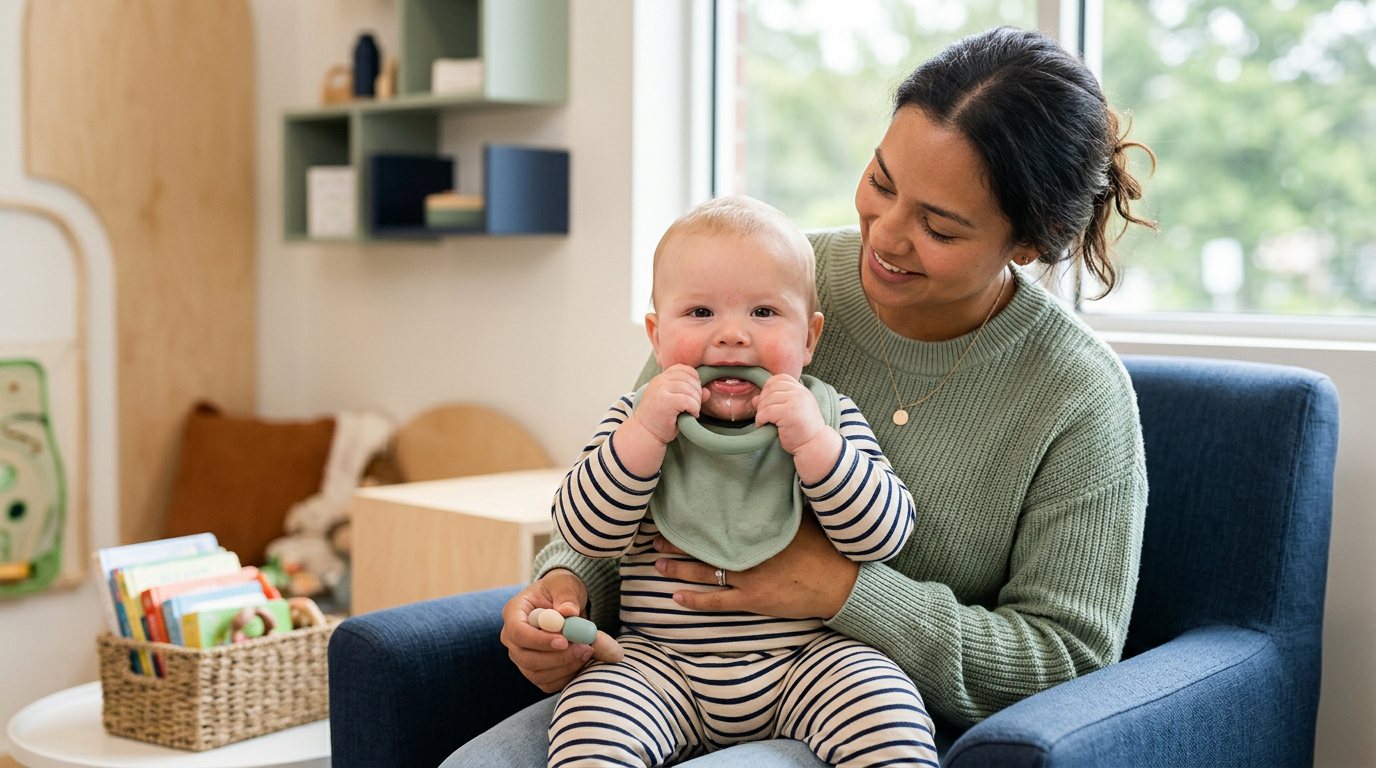
The teething timeline
Lower front teeth usually arrive first at about 6 months, followed by upper front teeth, then the first molars around 12–15 months, canines at 16–20 months, and second molars near the second birthday. By age 3 most children have all 20 baby teeth.
Signs that are genuinely teething
Mild drooling, gum rubbing, wanting to chew on things, and a slightly irritable mood for a few days per tooth are typical. A slightly raised temperature can occur, but a true fever above 38°C, diarrhoea, or widespread rash is not teething — check with your doctor.
What actually helps
A clean, chilled (not frozen) teething ring, a cold wet washcloth to chew on, gentle gum massage, and extra cuddles work best. Avoid teething gels with lidocaine or benzocaine and never use amber necklaces, which are a real choking and strangulation risk.
Questions about your child's smile or breathing?
Book an online consultation or visit one of our clinics for a full orthodontic and airway assessment.
Choose your regionMore articles
- When should I start cleaning my baby's mouth?Oral care starts on day one — before the first tooth even appears. Early habits set the stage for healthy teeth and easier brushing later.
- Your child's first dental visit: why by age oneThe first dental check should happen by the first birthday or when the first tooth appears. Here's what happens and how to make it easy.
- Brushing a toddler's teeth without a daily battleBetween 1 and 3, brushing can turn into a fight. These practical strategies keep teeth clean and the routine peaceful.