
Crossbite in children: why we treat it early
14 August 2026 · 4 min read
A crossbite can push the lower jaw sideways and shape facial growth. It is one of the clearest reasons for early treatment.
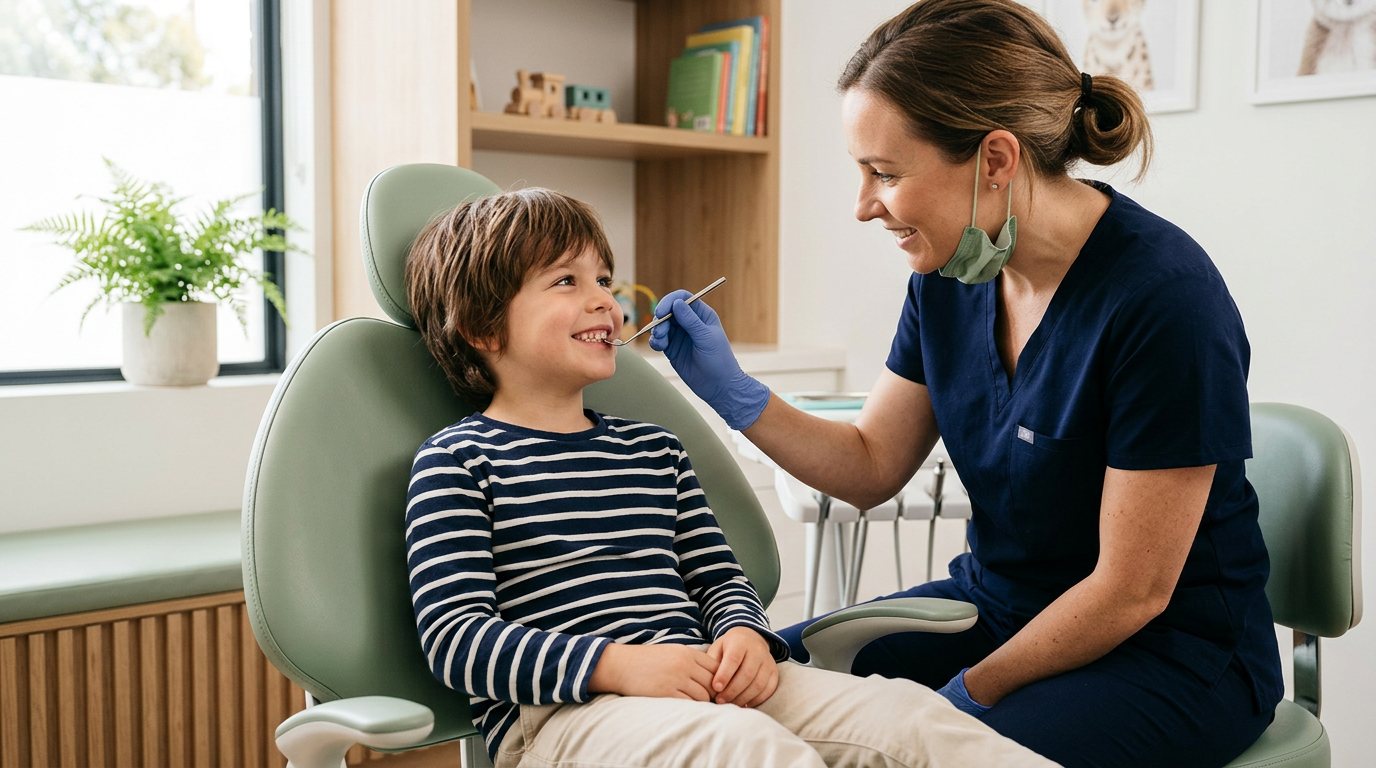
What a crossbite looks like
In a normal bite the upper teeth sit slightly outside the lower teeth. In a crossbite one or more upper teeth close inside the lower ones, most often because the upper jaw is too narrow.
The hidden effect on growth
Children often shift the lower jaw to one side to find a comfortable bite. Over years this functional shift can lead to asymmetric jaw growth, uneven tooth wear and jaw-joint discomfort.
Treatment is usually simple
In a growing child, widening the upper jaw with an expander or aligners typically resolves a crossbite in a few months. Treated later, once growth is complete, the same problem can require surgery.
Questions about your child's smile or breathing?
Book an online consultation or visit one of our clinics for a full orthodontic and airway assessment.
Choose your regionMore articles
- When should my child first see an orthodontist?Age seven is the widely accepted moment for a first orthodontic check — long before all baby teeth are gone. Here is why timing matters.
- Early (interceptive) orthodontics explainedInterceptive treatment uses your child's growth as a tool. Learn what phase-one orthodontics can and cannot achieve.
- Braces or aligners for children: how to chooseFixed braces and clear aligners can both work beautifully for children. The right choice depends on the bite, the age and the child.