
Fluoride for babies and toddlers, made simple
12 August 2026 · 4 min read
Fluoride is safe and is the single most effective tool against early decay — when the amount and timing are right.
Why fluoride matters under 3
Fluoride strengthens enamel and can even reverse the earliest white-spot stage of decay. Baby teeth have thinner enamel than adult teeth, so decay moves fast — fluoride is the cheapest, best-evidenced protection we have.
How much, and when
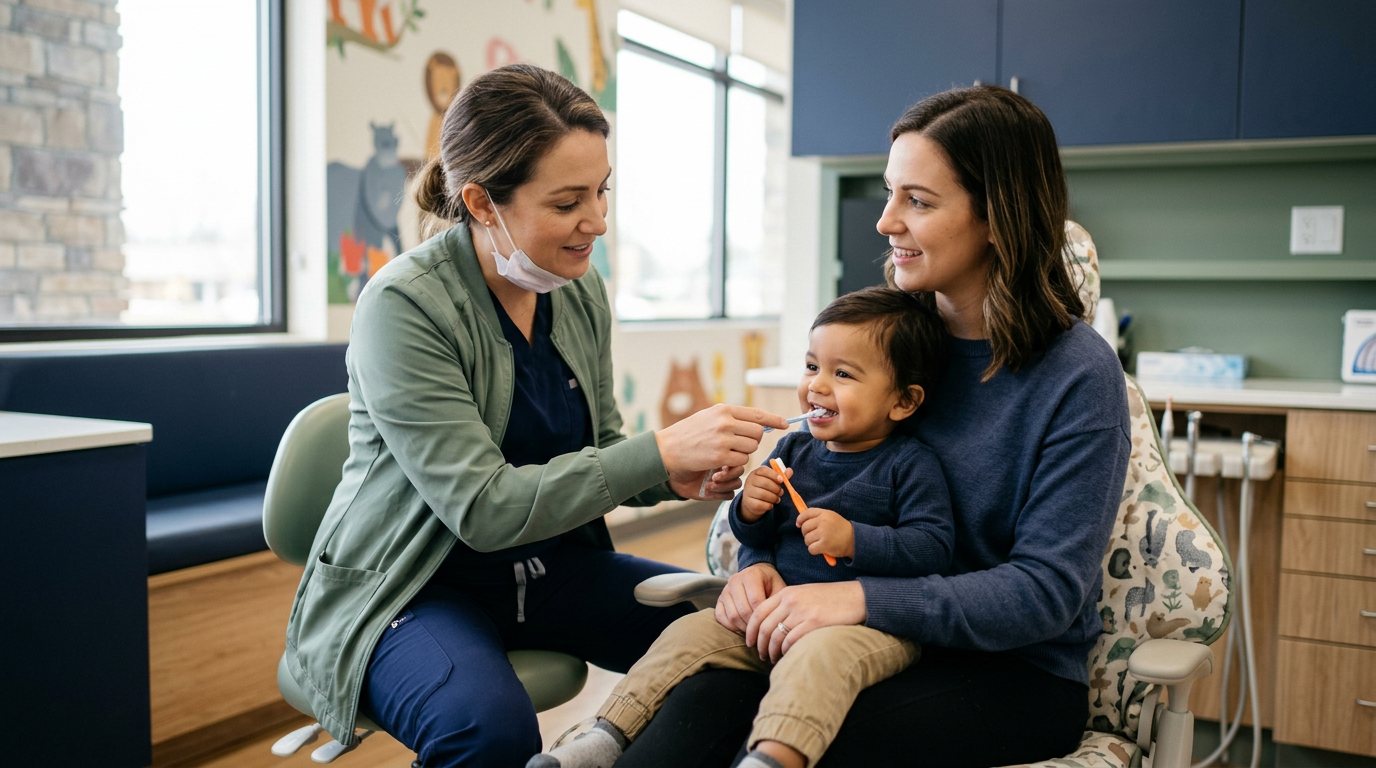
From the first tooth, use a soft smear of 1000 ppm fluoride toothpaste twice a day. From age 3, move to a pea-sized amount of 1350–1500 ppm. Always spit, don't rinse, so fluoride stays in contact with the teeth overnight.
Fluoride varnish at the dentist
From around age 2–3 we apply a professional fluoride varnish twice a year. It takes a minute, tastes neutral, and gives a strong protective boost for children starting to eat a wider range of foods.
Questions about your child's smile or breathing?
Book an online consultation or visit one of our clinics for a full orthodontic and airway assessment.
Choose your regionMore articles
- When should I start cleaning my baby's mouth?Oral care starts on day one — before the first tooth even appears. Early habits set the stage for healthy teeth and easier brushing later.
- Baby teething: what to expect and how to helpTeething is a normal, staged process from around 6 months to age 3. Here is what the timeline looks like and what actually soothes a teething baby.
- Your child's first dental visit: why by age oneThe first dental check should happen by the first birthday or when the first tooth appears. Here's what happens and how to make it easy.